

Have you been told cold email “doesn’t work” by someone who tested it for 3 weeks? They didn’t test cold email; they tested warmup. Real cold email timelines start at 8 weeks minimum.
Most founders quit during warmup without realizing it. That’s the most expensive mistake in the channel.
This article walks through what to expect week by week, what to track, and when to actually pull the plug.
“Cold email doesn’t work” usually means “I quit too early”
Founders telling me cold email doesn’t work for their business almost always tested it the same way. Three weeks, two domains, a few hundred emails, no replies, then they quit.
What they actually tested was email warmup, which finishes at week 4 in most setups. The first real prospect emails went out the day they decided cold email doesn’t work.
Three weeks isn’t an experiment. It’s quitting before you started.
Cold email needs 8 weeks minimum to produce data you can judge. Anything shorter is a setup test, not a channel test.
The 4-week warmup truth
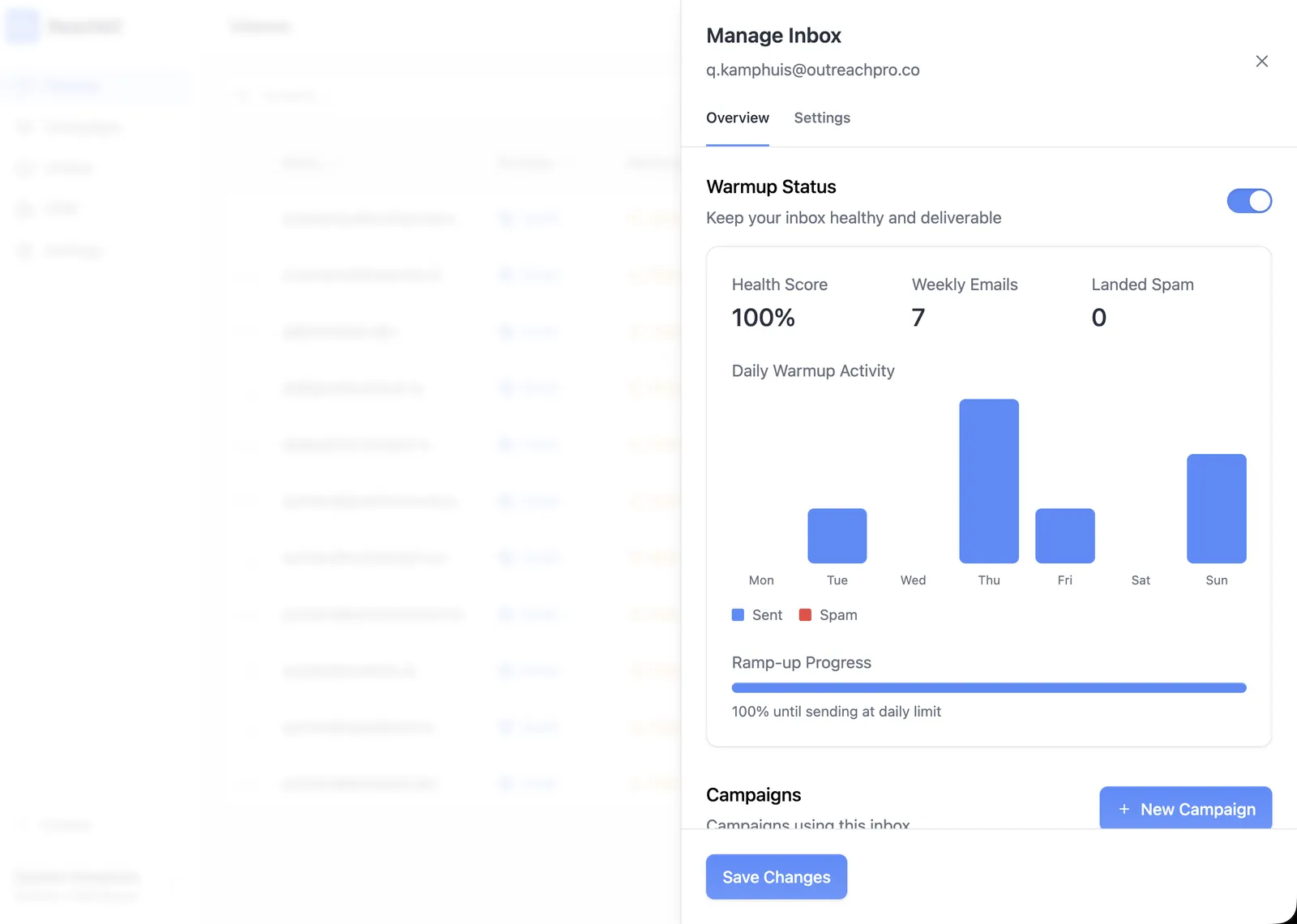
Warmup is the process of building sender reputation before real campaigns. Your platform sends small, gradual volumes between warmup accounts so Google and Outlook see a healthy sending pattern.
Warmup takes 4 weeks. Non-negotiable. Skipping warmup or shortening it is the fastest way to burn a domain.
During those 4 weeks, you’re not sending real prospect emails. If you fire real campaigns before warmup completes, you go to spam regardless of how good the copy is.
Wait the four weeks. The platform handles it; your job is patience. The full infrastructure guide covers warmup, domain setup, and DNS in detail.
Week 5: first real sends (small volume)
Once warmup is done, start sending to real prospects at small daily volume. 30 to 50 emails per inbox per day is the safe starting point.
Don’t blast 1,000 emails on day one. Even with completed warmup, ramping gradually keeps deliverability healthy. Most platforms ramp automatically.
Week 5 replies are mostly out-of-offices and unsubscribes; a few might be real conversations. This is normal.
Don’t judge the campaign yet. One week of data isn’t enough to see patterns.
Weeks 6 to 8: pattern recognition
By week 6 you’re seeing patterns. Not enough to make decisions, but enough to notice what’s working.
What to watch:
- Open rate trending toward 30-50%. Healthy infrastructure.
- Reply rate appearing. Even 0.5-1% means the channel is alive.
- Specific segments responding more. Data for tightening the list.
- Specific subject lines outperforming others. Data for iterating copy.
By week 8, you have around 1,500 to 3,000 sent emails per inbox. Enough volume to see real reply rates, real conversion to meetings, real persona patterns.
Don’t make changes during weeks 6-8. Collect data. Decisions come at week 9.
Week 9 and beyond: enough data to judge
Eight full weeks of running campaigns gives you the data to actually decide whether cold email works for your business.
What “working” looks like:
- Open rate above 30% (infrastructure is solid)
- Reply rate above 1% (list is decent or better)
- Meeting conversion on positive replies above 25% (process is solid)
- At least 4-8 booked meetings from 5,000-10,000 sends
Hit those numbers and the channel is alive. Optimize from here.
Don’t hit them and you have actual data to diagnose what’s broken. Use the 4 systems framework to find the broken layer.
What to track during the test
The metrics that actually tell you something:
- Inbox placement. Mail Tester or your platform’s deliverability dashboard shows this directly.
- Open rate. A signal of subject line and inbox placement combined.
- Reply rate. The single most important metric. Healthy: 1-3% baseline, 5-10% segmented lists, 7-15% intent-based.
- Meeting conversion on positive replies. Healthy: 20-30%.
- Cost per meeting. Total spend divided by meetings. The metric that decides P&L.
Skip the vanity metrics: total emails sent, weekly digest reports, made-up engagement scores.
Common mistakes that look like cold email “not working”
Some patterns get blamed on “the channel” when they’re setup mistakes:
- Quitting at week 3. You quit during warmup. The channel never started.
- Blasting full volume on day one. Burned domain, deliverability collapses, replies impossible.
- No follow-ups. Most replies come from sends 2 and 3. One-touch campaigns miss most meetings.
- Wrong list. Open rate fine, reply rate zero. The wrong people are opening.
- Generic copy. “We help companies scale through AI-powered solutions” gets ignored regardless of warmup.
Run the diagnostic before declaring cold email broken.
When to extend the test (and when to pull the plug)
Most founders with low reply rates at week 9 shouldn’t extend the test. They should diagnose.
Extend the test when:
- Open rate is climbing each week (warmup is still ramping).
- You changed lists at week 6+ and want clean data on the new list.
- You’re hitting your numbers but want larger sample size for confidence.
Pull the plug when:
- All four systems are healthy by week 9 metrics and you’re still under 0.5% reply rate.
- Cost per meeting is over 5% of average deal size with no clear path down.
Most “pull the plug” moments are actually “fix the broken system” moments. Run the diagnostic first.
FAQ
How long should you test cold email before judging if it works? 8 weeks minimum. 4 weeks of warmup, then 4 weeks of real sends. Anyone testing for 3 weeks tested warmup, not the channel.
What is the 30/30/50 rule for cold emails? A heuristic for healthy metrics: 30% open rate, 30% reply rate of those opens, 50% positive of those replies. The numbers are aspirational; real-world averages are lower (20-40% open, 1-3% reply on the full send list).
How long is too long for a cold email? Over 100 words is too long for a first send. Cold email is read in under 30 seconds; longer copy gets skipped.
Why do my cold email tests fail? Usually you tested warmup not the channel. Or your list or message is broken. Run the 4 systems diagnostic to find which.
What is the 80/20 rule in cold email? Cold email is roughly 80% list and 20% everything else. Spend your time on targeting before rewriting copy.
How many emails do I need to send to know if cold email works? Around 1,500 to 3,000 per inbox over 4 weeks of real sending. Less and you can’t see patterns; more and you’re scaling before you’ve validated.
What if I see no replies at week 5? Normal. Week 5 is the first real send week; reply rate builds across weeks 6 to 8.
Bringing it home
Cold email needs 8 weeks minimum to produce data worth judging. 4 weeks warmup, 4 weeks real sends. Founders who test for 3 weeks tested warmup; the channel never had a chance.
By week 9 you have actual data: open rate, reply rate, meetings booked, cost per meeting. Healthy numbers mean optimize; broken numbers mean diagnose.
Most “cold email doesn’t work” verdicts come from week 3.
If you’re starting now, give it the full 8 weeks. Run your in-house build or start with Reachkit, and don’t judge before week 9.