

Have you noticed how cold email advice always seems to focus on copy or subject lines while glossing over everything else? That’s how most founders end up with great-looking emails and zero meetings.
Cold email isn’t one skill. It’s four systems working together. Get one wrong and the whole thing breaks.
This article explains the framework I use to diagnose every cold email setup, why most campaigns fail at system 2, and how the four systems compound when they’re all healthy.
Why cold email looks like one skill but is actually four
Most cold email advice treats the channel as one thing to optimize. Pick better subject lines, write punchier copy, follow up more, send more.
The problem with that framing is that it misses where most cold email actually breaks. When I diagnose campaigns that aren’t working, the issue is rarely the copy. It’s usually one of three other systems that nobody talks about.
Cold email is four systems running in parallel: infrastructure, list, message, process. The four systems compound when healthy and break the whole channel when one is off.
System 1: Infrastructure
Domains, inboxes, warmup, DNS records (SPF, DKIM, DMARC). Infrastructure is what makes Google trust your sends.
When infrastructure is broken, your emails go to spam regardless of how good the copy is. Symptoms include open rates under 20%, replies showing up in spam folders, and unexplained drops in deliverability after a working week.
Founders I work with sometimes spend three weeks rewriting copy when their warmup never finished. The copy was always fine; the infrastructure was the problem.
Fix infrastructure first. Until your sends land in inboxes, nothing else you change matters.
System 2: List
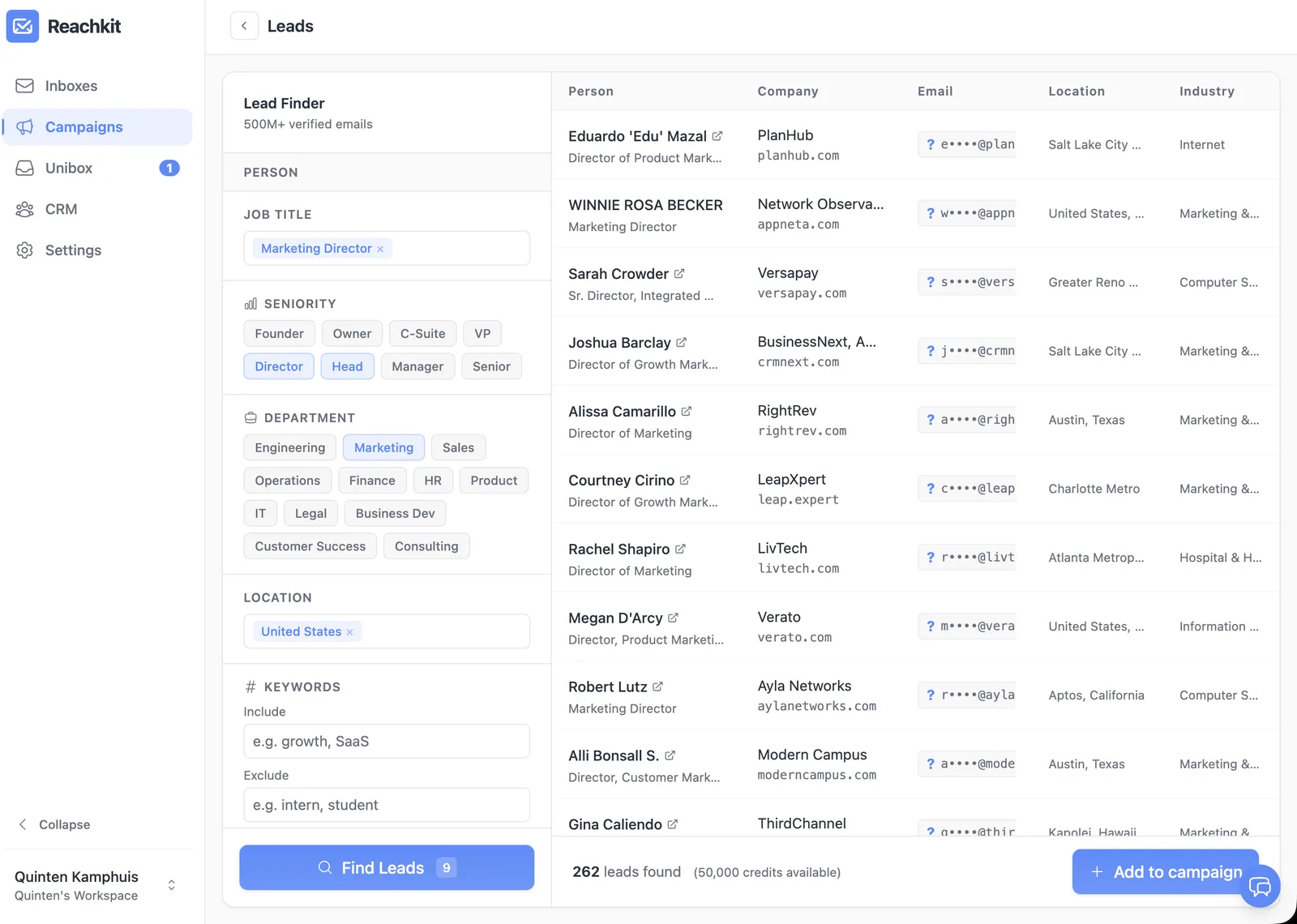
The right people, with verified emails, who actually fit your ICP. List is where most cold email failures live.
A typical broken-list pattern: 700 emails sent, 26.7% open rate, zero replies. Opens prove the infrastructure works. Zero replies prove the people opening are wrong: either ICP is off, contact data is stale, or buyer personas were never researched.
Cold email is roughly 80% list and 20% everything else. Most founders spend 20% of their time on the list and 80% on copy. Flip it.
System 3: Message
A clear offer, in short copy, that sounds like a human wrote it. Message matters when systems 1 and 2 are healthy.
A great email sent through broken infrastructure to the wrong list books zero meetings. A passable email sent through healthy infrastructure to the right list books meetings consistently.
The rules for message are short:
- One clear offer per email.
- Under 100 words for the first send.
- Sounds like a real person, not a template.
- Specific to the reader, not a generic pitch.
Stop rewriting your message until you’ve fixed list and infrastructure first.
System 4: Process
Follow-ups, reply handling, attribution. Process is what keeps a healthy campaign running and what most founders skip entirely.
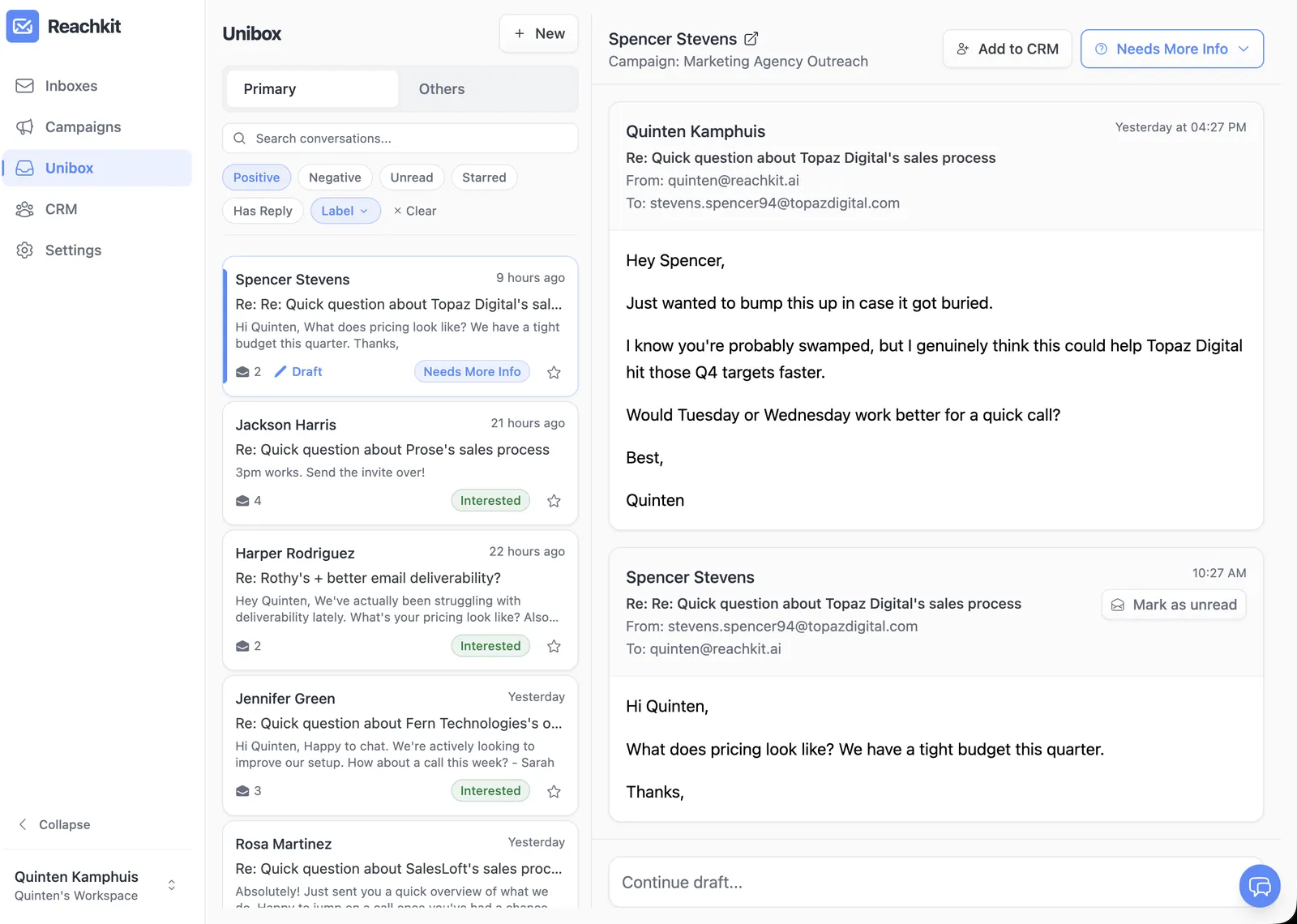
Most replies in cold email come from the second or third follow-up, not the first send. Founders who quit after one send miss the bulk of their pipeline. Founders who follow up too aggressively burn the relationship.
The process layer also includes reply handling. When a prospect replies “tell me more”, what you send next decides whether the conversation continues or dies. A wall-of-text response or a Calendly link usually kills it; a short human response keeps it alive.
Build the process before you scale the volume.
How the systems compound when all 4 work
Each system multiplies the next. Healthy infrastructure delivers the email; a targeted list ensures the right person opens it.
A clear message earns the reply. A real follow-up process turns the reply into a meeting.
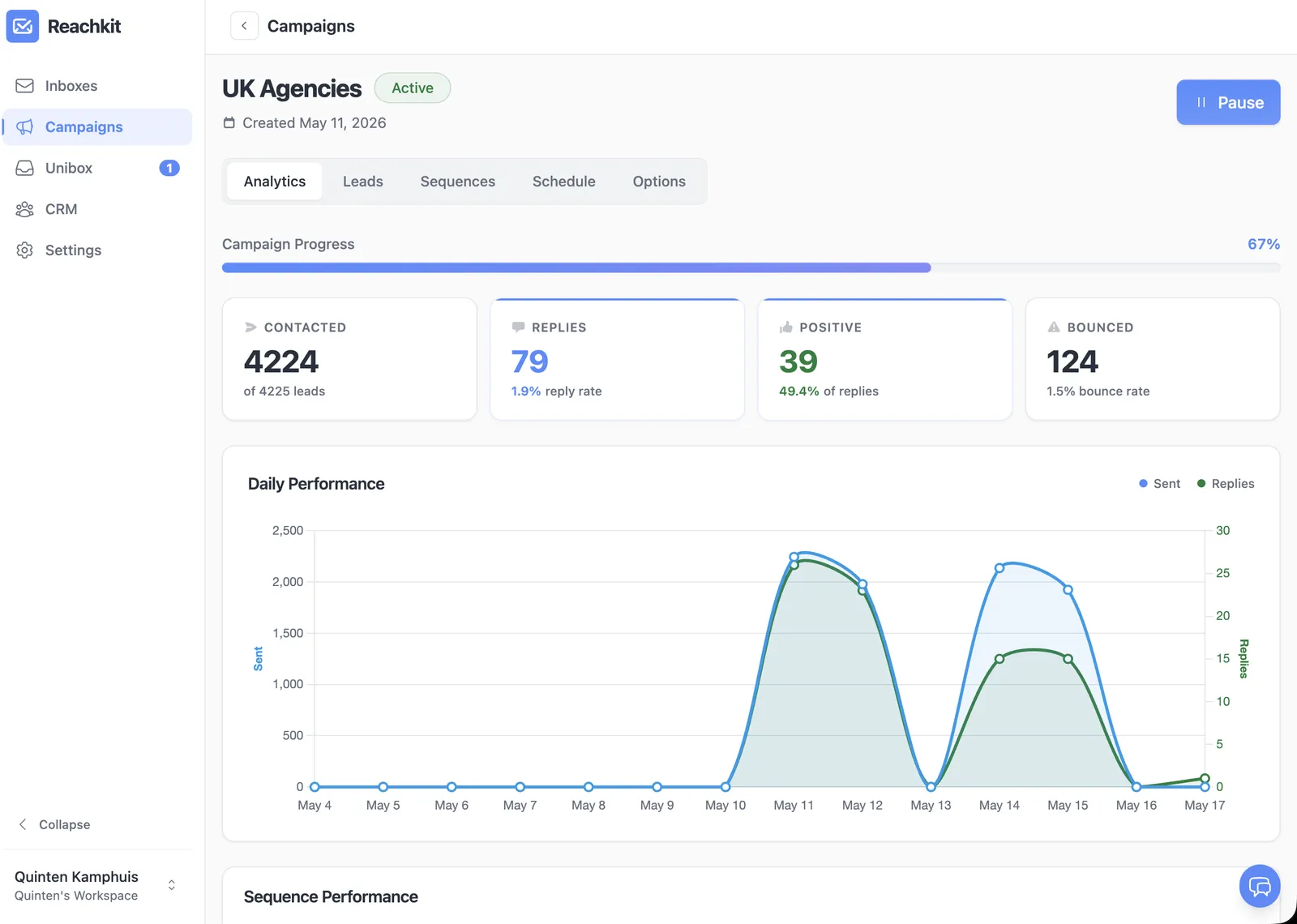
The math: 95% inboxing × 30% open × 5% reply × 30% meeting conversion = about 4 meetings per 1,000 emails. That’s a typical ratio when all four systems are working.
Break any one: infrastructure at 60% inboxing, or list at 1% reply rate, or no follow-up. The math collapses by an order of magnitude.
The diagnostic: which system is broken?
Find the broken system by looking at where the funnel collapses:
- Open rate under 20%? Infrastructure. Check warmup, DNS, whether you’re using your main domain.
- Open rate fine, reply rate near zero? List. The right people aren’t opening; re-check ICP, verify emails, segment more tightly.
- Replies coming in, no meetings? Message or follow-up. Read the replies; usually the message is unclear.
- Meetings booked, no closes? Sales problem, not a cold email problem.
Run the diagnostic before changing anything. Working on the wrong system is the most common waste of time in cold email. Give the diagnostic the full 8 weeks of data; quick reads on a 2-week test mislead more than they help.
Why most campaigns fail at system 2
When I check why a campaign isn’t working, list is the answer about 70% of the time. Infrastructure errors are one-time fixes; copy issues show up in the diagnostic; list errors hide.
Why list is the silent killer:
- Stale data from Apollo or ZoomInfo with months-old contact info.
- ICP defined too broadly (“B2B SaaS founders” is a category, not an ICP).
- Persona buyer mismatch (targeting CEOs when the buyer is the marketing director).
- List built for volume rather than fit.
Spend the time on the list. The rest of cold email starts working when the list is right.
FAQ
What are the 4 systems of cold email? Infrastructure (domains, inboxes, warmup, DNS), list (right people, verified emails), message (clear offer, short copy), and process (follow-ups, reply handling, attribution). All four have to work for the channel to produce meetings.
What is the most important part of cold email? The list. Cold email is roughly 80% list and 20% everything else. Most founders obsess over copy when they should obsess over targeting.
How do I know which system is broken? Look at where the funnel collapses. Low open rate means infrastructure; open but no reply means list; replies but no meetings means message or follow-up.
What’s the 80/20 rule for cold email? Cold email is roughly 80% list and 20% everything else. Spend your time on targeting before you spend it on rewriting copy.
What is cold email infrastructure? The technical foundation: domains, inboxes, DNS records (SPF, DKIM, DMARC), and warmup. Infrastructure is what makes Google trust your sends and land them in inboxes.
How long should a cold email be? Under 100 words for the first send. The reader is scanning, not reading. Short, specific, one clear offer.
Should I follow up on cold emails? Yes. Most replies come from the second or third follow-up, not the first send. Plan a 3-touch sequence over 7 to 10 days.
Bringing it home
Cold email is four systems compounding: infrastructure, list, message, process. Get one wrong and the whole channel breaks.
Most founders spend 80% of their time on copy when 70% of failures are list problems. Diagnose first; fix the actual broken system.
The framework lets you stop guessing about why your campaigns aren’t working. Run the diagnostic, fix the broken system, and the rest of cold email starts working.
Walk through the systems on your own in-house build, or try Reachkit free to see what a working stack looks like.